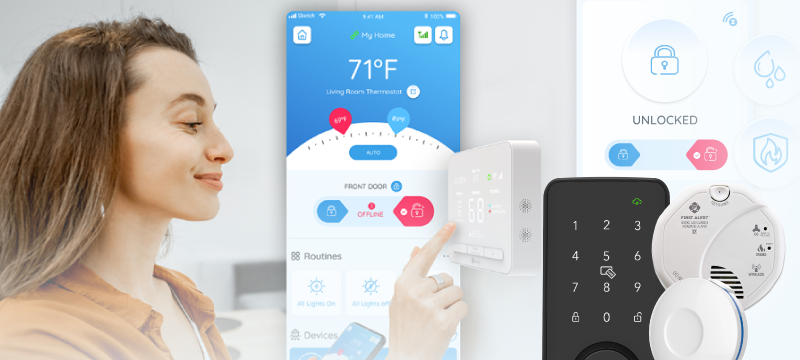
In 2026, smart home technology has officially shifted from a “luxury amenity” to “core infrastructure”. Whether you own/operate single-family rentals or a multifamily portfolio, the question is no longer if you should upgrade, but how fast those devices will pay for themselves.
At Rently, we see smart home technology as more than just gadgets. They’re a financial engine that drives Net Operating Income (NOI). Here is how you can calculate the tangible return on investment (ROI) for the most impactful smart home technology devices.
1. Smart Locks: The End of the “Key Tax”
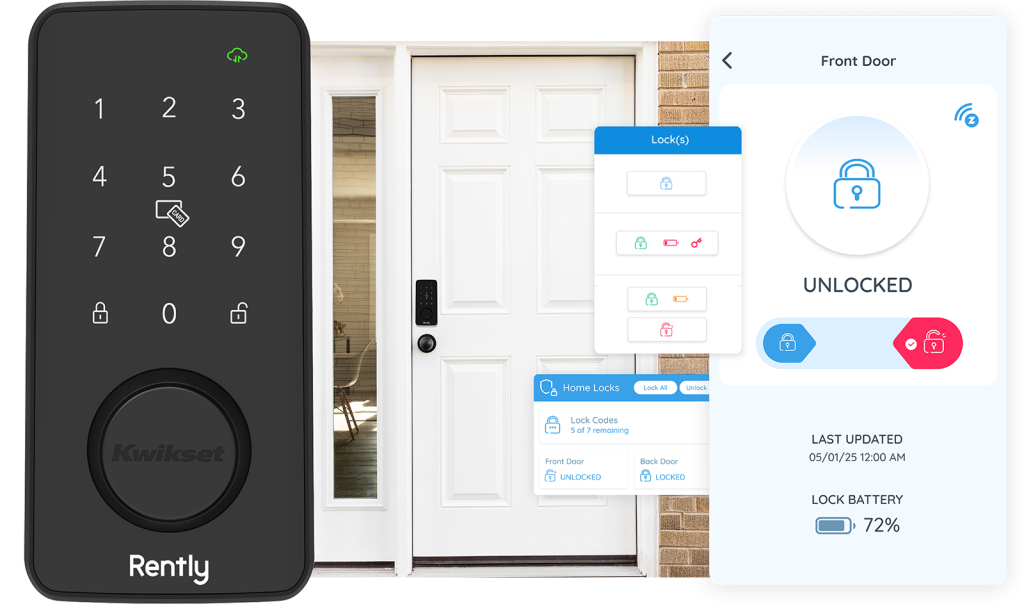
Traditional locks carry a hidden “key tax”—the constant, often overlooked, cost associated with rekeying units after every tenant turnover, responding to costly lockouts, and the cumbersome administrative burden of manual key management. This “tax” is not a one-time expense but a perpetual drain on operational budgets, encompassing everything from locksmith fees and new key cutting to staff time spent tracking and distributing physical keys. This inefficiency creates a significant drag on the profitability and speed of the leasing cycle.
The Calculation:
- Direct Savings: Multiply your average rekeying cost (typically $50–$100 per turnover) by your annual turnover rate.
- Labor Efficiency: Integrated smart locks increase maintenance productivity by 20–50% because technicians no longer waste 10–15 minutes “pulling keys” from a central office.
- Revenue Boost: Rently’s self-guided touring, powered by smart locks, can reduce time-on-market by 75%.
2. Leak Sensors: The Disaster Preventer
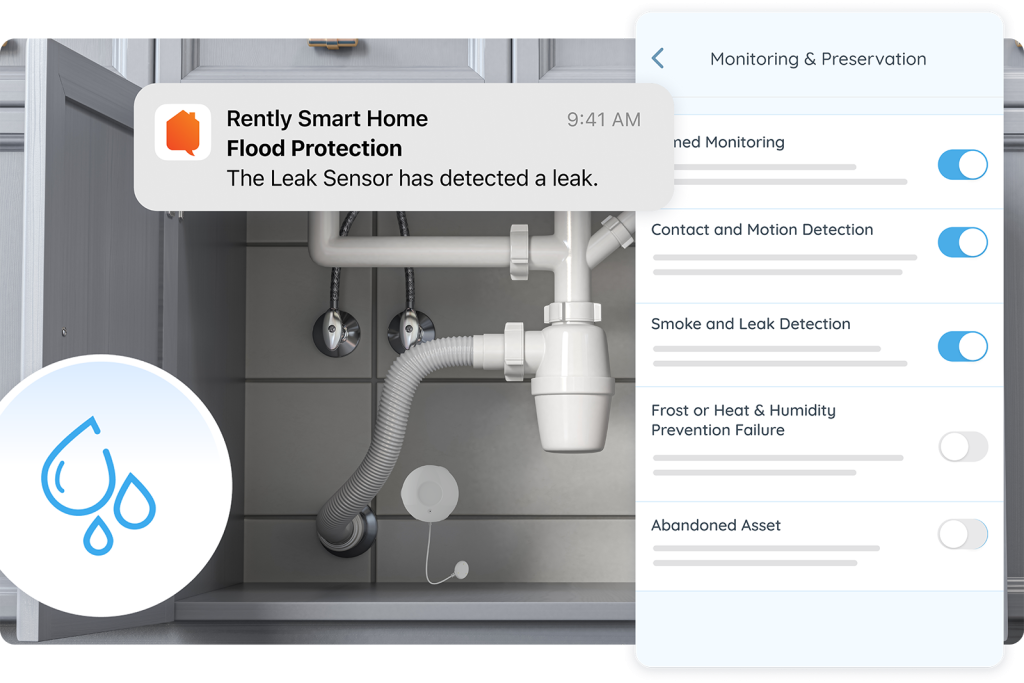
The financial fallout from a single, significant water event, such as a burst pipe, a forgotten running faucet, or a major appliance malfunction, is staggering. A leak can result in remediation and repair costs ranging dramatically from $5,000 for localized damage to upwards of $100,000 for extensive, multi-unit flooding that necessitates structural repairs and extensive mold abatement.
This cost encompasses more than just plumbing and drywall repair; it typically includes:
- Emergency Services: Costs for immediate water extraction and drying equipment rental.
- Structural and Cosmetic Repairs: Replacing damaged flooring, subfloors, walls, ceilings, insulation, and fixtures.
- Mold Remediation: The potentially complex and expensive process of identifying and safely removing mold growth, which often follows water intrusion.
- Increased Insurance Premiums: Even a single large claim can lead to a sustained increase in a property owner’s insurance rates over several years.
- Loss of Rental Income (Vacancy): Affected units become uninhabitable during the repair and remediation process, directly eliminating the income stream for that period.
- Deductibles: The immediate out-of-pocket expense before insurance coverage begins.
The silent nature of this threat—often occurring behind walls, in utility closets, or when a unit is vacant—underscores the urgent need for proactive, technology-driven monitoring solutions to mitigate this substantial and unpredictable risk to a real estate investment’s profitability.
The Calculation:
- Annual Loss Avoidance: (average # of leaks per year) × (average cost of repair).
- The Benchmark: Many owners report an “immediate” ROI or payback within one year by catching slow-drip leaks before they rot subflooring.
- Insurance Savings: Protecting your property with leak detection can lower annual insurance premiums by 10–20%.
3. Smart Thermostats: Immediate & Preventative Savings
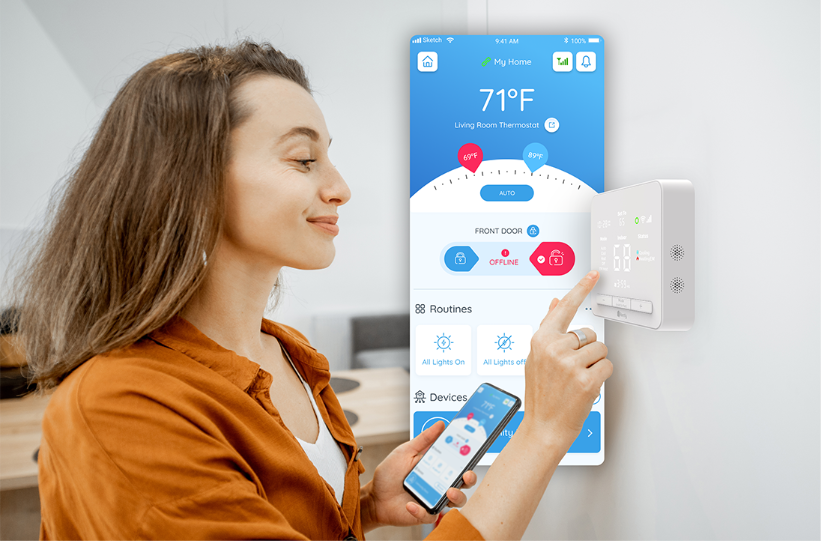
Smart HVAC systems offer immediate return on investment for owners by significantly reducing energy consumption and mitigating major repair costs. They also protect long-term asset value and extend HVAC system lifespan by reducing equipment strain.
The Calculation:
- Energy Cost Reduction: Smart HVAC systems that adjust heating and cooling based on real-time occupancy data have led to an 8-10% reduction in energy costs, with some programs achieving up to 20% savings in specific climate conditions, according to comprehensive field studies across various climate zones.
- Annual Savings Per Unit: Smart scheduling and temperature optimization can result in annual savings of approximately $50 per unit.
- Emergency Repair Savings: Preventing major HVAC failures with predictive maintenance programs can provide cost savings of 8-12% over preventive maintenance alone and 30-40% savings over reactive maintenance according to federal building efficiency studies.
4. Smoke & CO Detectors: Real-Time Peace of Mind
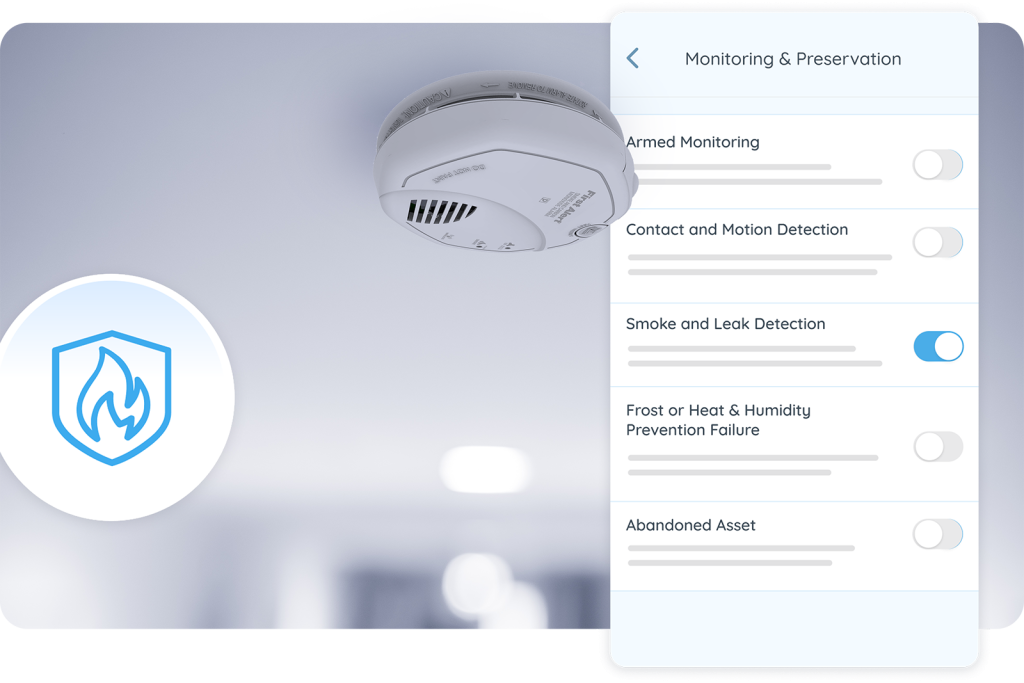
Standard alarms only help if someone is there to hear them. Smart smoke/CO detectors alert your team instantly.
The Calculation:
- Liability Reduction: Calculate the potential cost of one structural fire versus the cost of a device that sends a notification the moment it detects smoke.
- Portfolio Oversight: For SFR owners, this provides a centralized view of fire safety without requiring a labor intensive manual inspection.
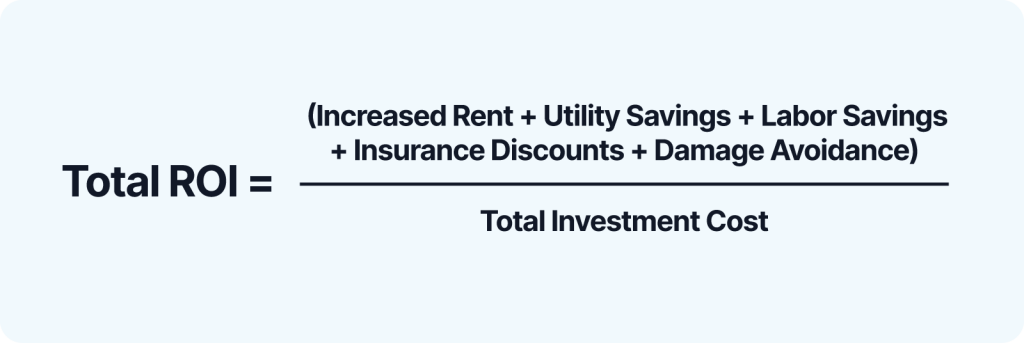
The “Bottom Line” Formula
To get your total ROI of smart home technology, don’t just look at rent premiums. Use this holistic view:
Why It Matters Right Now
- Renter Demand: 58% of renters would sacrifice a pool or gym for smart home features.
- Willingness to Pay: Residents are prepared to pay an average of $37.65 per month for a smart amenity package.
- Asset Value: Every dollar saved in operating expenses (OPEX) directly increases your property’s valuation based on market cap rates.
Ready to see the numbers for your specific portfolio? Book a consultation with our team to run through an ROI of smart home technology calculation based on your unique data.