So you’ve deployed smart home technology at your properties—great! Now comes the critical part: making back your investment. Along with operational benefits, one of the most valuable features of smart home is how desirable it is to renters. But, if your prospects aren’t aware you have the tech, you’re not going to see those results. In this blog, we’ll cover renter expectations, marketing themes to focus on, and concrete approaches to marketing smart home technology to renters.
What Renters Want
To understand how to market smart home technology to renters, you have to first understand renter desires and expectations. In our 2025 Smart Apartment Trends Report, we found that security is the biggest concern for renters, with 41% citing their desire to feel safer at home as their primary reason for wanting smart home tech. Other major factors include saving on energy bills and controlling their homes remotely. This information gives you a head start when crafting your messaging.
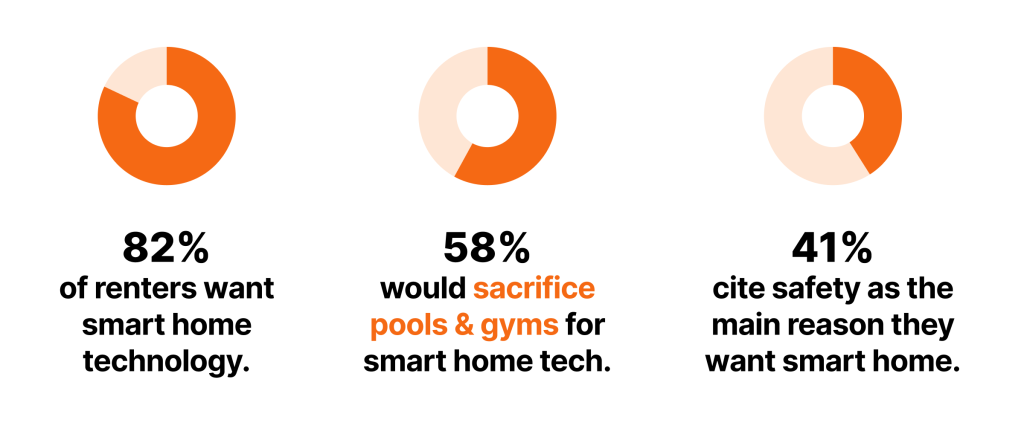
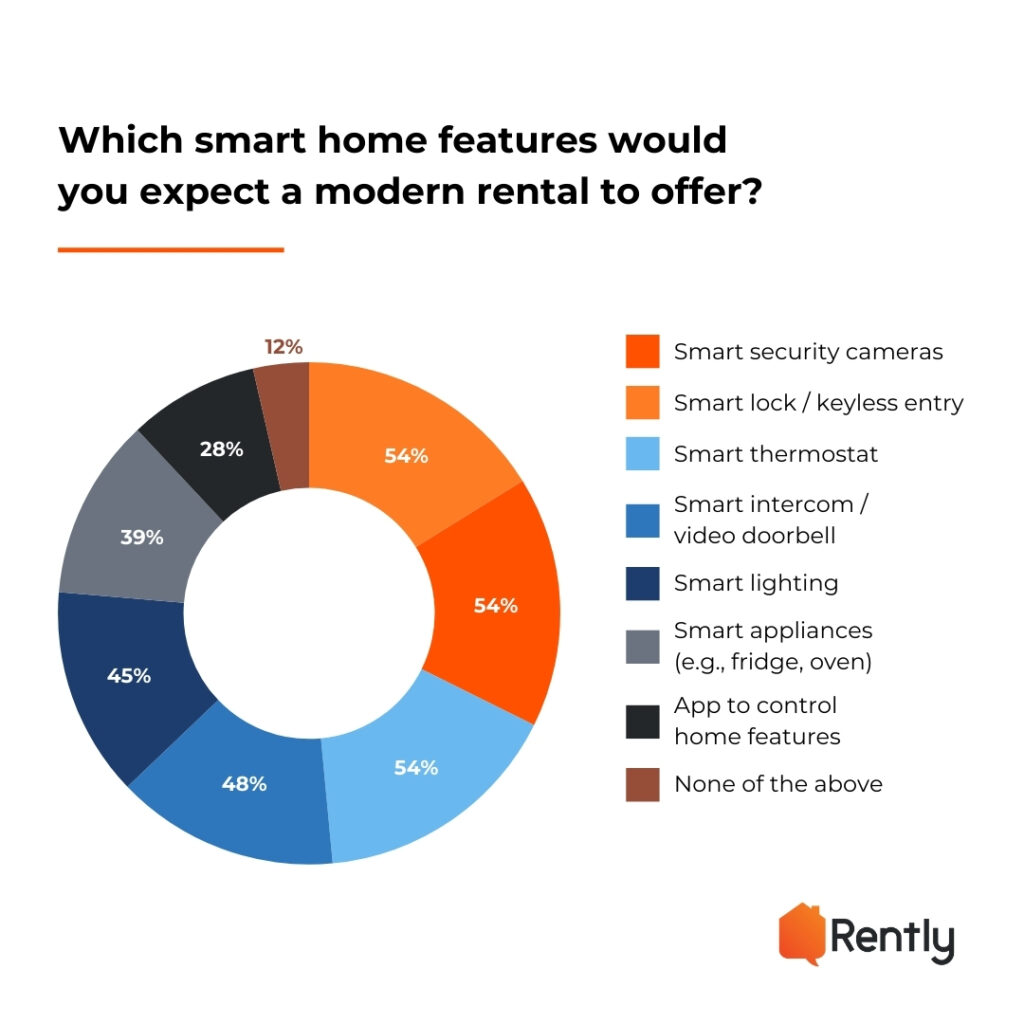
When it comes to specific devices, the survey results also align with security, energy, and convenience. Smart security cameras, smart locks, and smart thermostats all tied for first place when renters were asked which smart home devices they expect modern rentals to offer. That’s not just what they want—that’s what they expect. All of this goes to show that smart home is no longer a luxury, but rather a necessity for today’s renters.
Communicating Value
Security, convenience, and efficiency are the themes to focus on when marketing your smart home technology. It’s important to let prospective renters know that you have what they’re looking for, whether or not they have specific devices in mind. Keep your messaging focused on value; don’t just list the hardware, tell them what it does.
For security, make sure you’re communicating the security measures at the home/unit level as well as the community level (if applicable). This includes security cameras, smart locks, doorbell cameras, motion sensors, and other smart devices. Emphasize peace of mind and that smart home technology puts safety at their fingertips, with real-time alerts of suspicious activity. Ensure that you are meeting renter expectations for security.
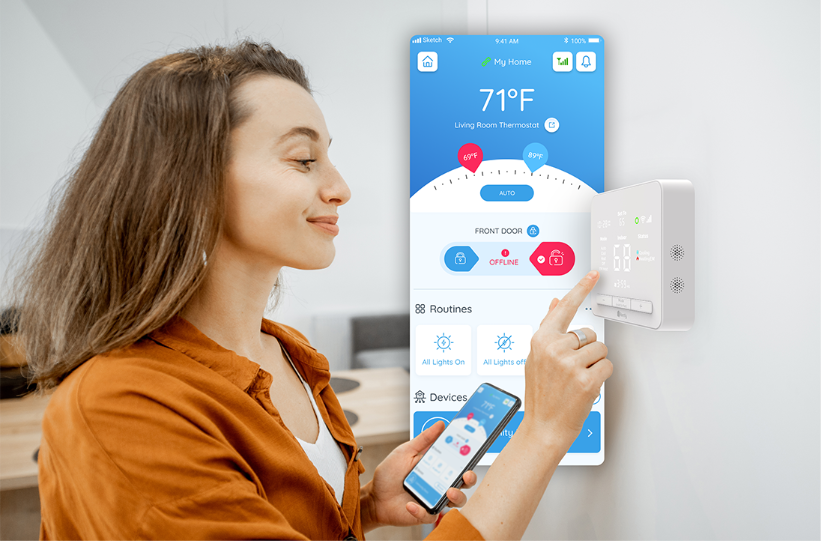
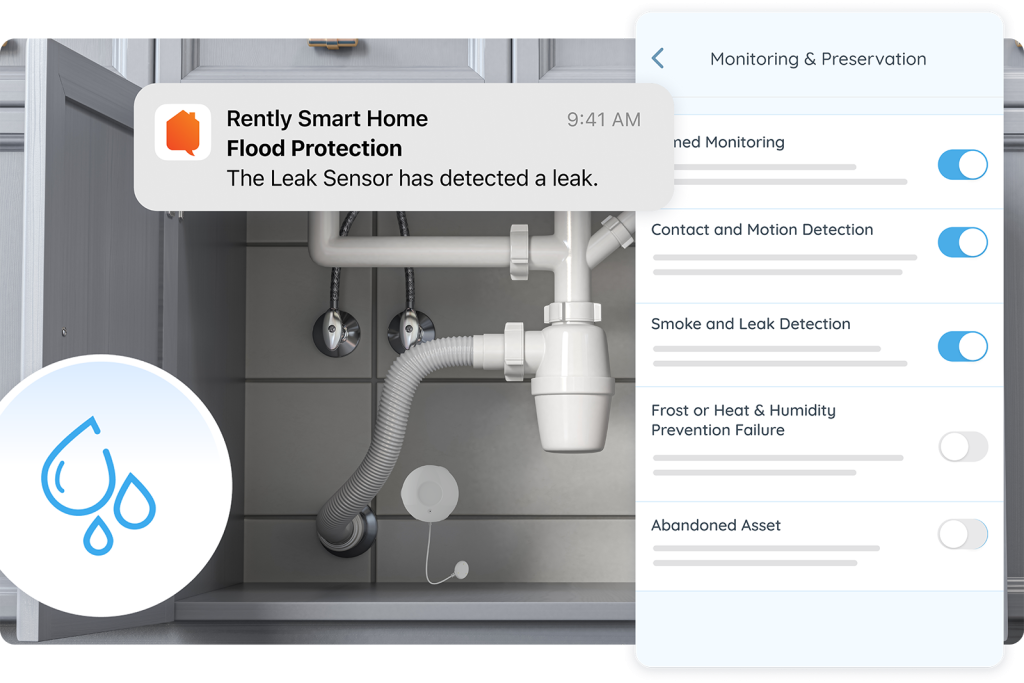
On the energy efficiency side, renters are largely concerned with utilities. Smart thermostats are often cited as the most desirable smart home devices along with smart locks, reducing utility bills and optimizing energy usage. Let your residents control the temperature remotely, and enable vacation mode when the home/unit is unoccupied, ensuring energy isn’t being wasted. Smart thermostats also monitor HVAC performance, alerting you to faulty units and ensuring timely repairs or replacements. Water leak sensors are another important device that can spare residents’ belongings from damage while saving managers thousands in repairs.
To sell renters on convenience, focus on the smart home app. Residents can manage and personalize their homes right from their smartphones. Never worry about lockouts with access via app, fob, key, or unique code. Grant access to guests or vendors with temporary codes. Set up automations—routines for smart lighting, thermostat schedules, and various alerts. Let renters know that they can even connect their own smart home devices (if you let them). Most smart home apps/providers will also streamline maintenance requests, making it simple to request maintenance and track work orders.
It all boils down to this: smart home makes your life easier! Whether it be mere convenience, huge savings, or peace of mind, residents can breathe easier with a fully-equipped smart lifestyle.
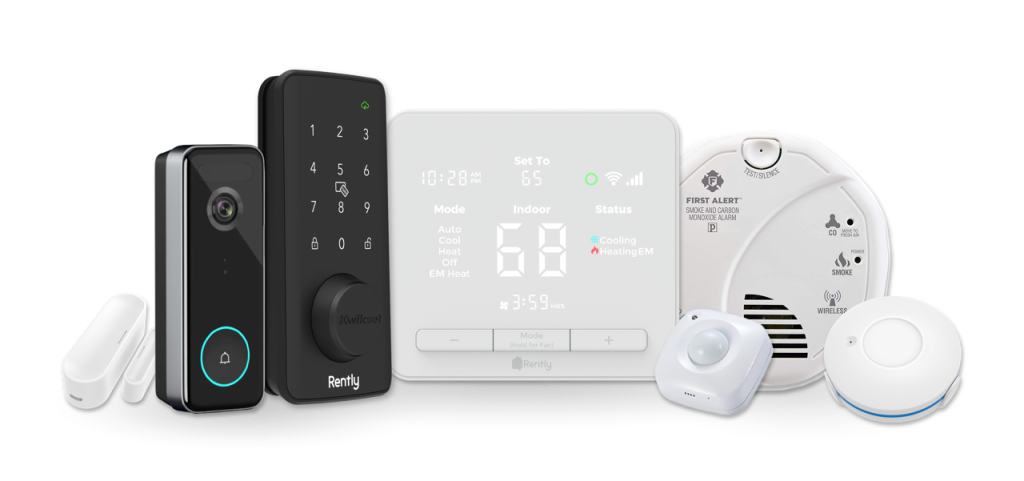
Here’s a quick rundown of functions by device:
– Smart Home Hub: Acts like a brain for your smart home ecosystem, connecting and controlling all of your devices using cellular, Wi-Fi, Ethernet, or Z-Wave.
– Smart Locks: Lock/unlock the door remotely, and easily add, remove, or change user codes. Battery power means they work during power outages.
– Security Cameras & Alarms: Deter crime with 24/7 monitoring and alarm sirens. Great for multifamily communities.
– Doorbell Cameras: Access real-time video footage, past recordings, and activity logs. Residents and managers can set up alerts.
– Water Leak Sensors: Detects water/moisture to prevent costly damage before it occurs, saving time and money on repairs.
– Contact Sensors: Place on windows and doors to detect when they are opened/closed. Set up schedules for notifications of potential breaches.
– In-Unit Motion Sensors: Set up real-time alerts when movement is detected inside the rental unit. Great for vacant units as well.
– Smart Thermostats: Remotely control heating, cooling, and fan settings to make sure the home is always the perfect temperature.
– Smart Lighting & Outlets: Personalize your home with schedules and routines, control remotely, set “vacation mode” for security.
Marketing to Prospective Renters
Now that we know what to say, let’s talk about how to say it. There are a lot of ways to get the word out about your amenities, starting with updating your listings. Tags or badges like “Smart Home Equipped,” “Keyless Entry,” and “Fully Connected” are a quick, efficient way to let renters know what each property has. Emphasize value, not just specific devices.
Within the description itself, focus on lifestyle. Showcase your smart home amenities with photos, videos, and descriptive language. Think about the type of renters you want to attract and go from there—for example, framing your property as a modern, tech-forward living experience perfect for busy professionals. You can even offer resources to explain specific features in more detail.
Consider creating a page on your website that covers the various smart home devices and features at your properties, explaining how they work and sharing photos. Showing this level of care and attention to detail will make prospective renters believe that they will be comfortable and supported at your property, and that positive brand association will stay with them.
Social media is your friend—this video from Progress Residential is a perfect example of going the extra mile to showcase the experience of living with smart home. This is the type of content that can be used both on social media platforms and on company/community websites, increasing brand awareness and attracting more renters.

Marketing to Residents
It’s not enough to deploy smart home tech—you have to make sure your tenants are experiencing the benefits. It may sound silly, but if your current residents aren’t using their amenities, they are missing out on key aspects of their rental experience that influence lease renewals.
To make sure that residents are adopting your smart home tech, start at move-in—invite them to download the smart home app and provide resources up front to encourage usage and minimize frustrations. Collateral like flyers, manuals, and online articles can make a big impact.
The most crucial thing, possibly more so than adoption, is support. If your residents can’t figure out how to use their smart amenities, they’ll be more frustrated than if they never had those amenities at all. Use existing support channels—most smart home providers also manage resident support. Be ready to evaluate potential vendors for their support resources and how to ensure residents can access them. And, of course, listen to renter feedback and be prepared to address their concerns.
Lastly, train your staff. Provide training on how to use all devices, and make sure they have the resources to answer questions about smart home. Our survey showed that renters’ biggest concerns regarding smart home technology are being monitored without consent, technology failing during an emergency, and getting locked out. Prepare your staff with specific device knowledge to answer these questions, for both residents and prospects. Be prepared to explain failsafes like jumpstart ability, multiple ways to access, multiple connectivity options, as well as what is and is not monitored.
Conclusion
Today, smart home isn’t a novelty—it’s a necessity, providing your business a competitive edge, resident satisfaction, cost savings, and streamlined operations. However, a financial investment in the technology only works with the operational investment to support it. Make sure you’re implementing new technology with plenty of care and forethought so that you can maximize ROI.
To learn more about marketing smart home, check out our webinar Ways to Market Smart Home as a Luxury Amenity.