

In the rapidly evolving PropTech landscape, particularly the smart home technology landscape, the “software-only” model is facing a reckoning. As global supply chains remain susceptible to semiconductor shortages, geopolitical shifts, and logistical bottlenecks, property operators are discovering that home automation software is only as reliable as the hardware it runs on.
This article explores the strategic necessity of vertical integration—specifically the in-house development and manufacturing of smart home hubs and hardware—and how it provides property owners and operators with a “certainty premium” in an uncertain market.
The “Digital Junk Drawer” Problem
Most smart home providers act as aggregators. They develop an app and then “white-label” or integrate with third-party locks, thermostats, and hubs.
While this allows for a quick market entry, it creates three critical points of failure for property owners:
- Hardware Dependency: If the third-party manufacturer faces a backlog, the provider’s entire installation schedule grinds to a halt.
- Firmware Friction: When a third-party manufacturer pushes a mandatory update, it can break integrations with the provider’s software, leading to “ghost” devices and resident frustration.
- End-of-Life Risk: If a third-party stops supporting a device, the property manager is left with “bricked” hardware across their entire portfolio.
This collection of disconnected apps, hardware, and logins also creates a friction-filled experience for end-users—property management staff and residents.
1. The Staff Burden: Login Fatigue and Training Debt

For property management teams, a fragmented tech stack is a productivity killer. When the intercom is from Company A, the lock is from Company B, and the thermostat is from Company C, your staff faces:
- The Log-In Labyrinth: Managers must navigate multiple dashboards just to offboard a single resident. This leads to “security debt,” where access permissions are often forgotten in one system while revoked in another.
- The Training Treadmill: Every time you hire a new leasing agent, they have to learn three or four different interfaces. This increases the “time-to-productivity” and leads to simple human errors that can result in lockouts or missed maintenance alerts.
- Support Finger-Pointing: When a device goes offline, the staff is stuck in the middle of a “blame game.” The software company blames the hardware, and the hardware company blames the app.
2. The Resident Friction: The “Multi-App” Move-In
Modern residents pay a premium for “smart” living, expecting convenience. Instead, a fragmented system gives them a chore.
- Multiple Identities: Residents shouldn’t need one app to enter the gate, another to unlock their door, and a third to adjust the AC. This “app bloat” devalues the amenity.
- The “Smart” Learning Curve: If a resident has to watch three different YouTube tutorials just to live in their apartment, the technology has failed.
A smart home shouldn’t feel like a collection of gadgets; it should feel like a cohesive service. Eliminating the Digital Junk Drawer reduces “cognitive load” for your staff and creates the seamless, premium experience that today’s renters are willing to pay for.
The Vertical Solution: Rently’s In-House Manufacturing Advantage

Rently’s decision to design, engineer, and manufacture its own hardware in-house (most notably the Smart Hub Pro) is a deliberate move to insulate our clients from these risks.
1. Strategic Component “Swap-ability”
During the 2020-2024 global chip shortage, many PropTech companies were paralyzed because they were tied to specific, unavailable chipsets.
The Rently Difference: Rently’s Smart Hubs are powered by proprietary Rently technology, giving us a unique advantage: the ability to rapidly evolve our hardware. As technology advances or component availability changes, we can quickly iterate and adapt—ensuring our platform stays ahead.
2. Immunity to Middleman Delays
Typical supply chains involve a “Tier 1” vendor who buys from a factory, who buys from a distributor. Each layer adds 4–6 weeks of lead time and a markup.
The Rently Difference: By working directly with the source, we remove the middle-layer friction. Rently maintains buffer stock of long-lead components like semiconductors and cellular modules. That means when a client is ready for a 500-unit rollout, the hardware is ready too—on our shelves, not sitting on a container ship waiting for a third party to clear their payments.
3. Native Integration: The “Brain” and the “Body”
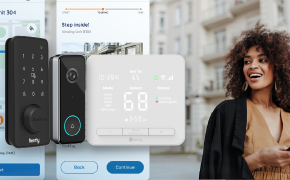
When hardware and software are developed under one roof, they speak the same language. For instance, when we developed our access panels, we ensured they worked for self-guided tours with expiring codes for touring prospects.
- Security & Stability: Our hubs run a firmware designed specifically for property management.
- Predictive Maintenance: Because we own the hardware telemetry, our software can detect a failing battery or a weakening signal long before a third-party device would report a generic “offline” error.
- Single Interface: As noted above, when residents and staff only need one app to control their smart devices, it increases adoption and satisfaction.
Financial Impact: The Certainty Premium
For a property owner, a delay in hardware installation isn’t just an inconvenience; it’s lost Net Operating Income (NOI).
- Faster “Time to Rent”: Hardware that is in stock means units go “live” faster.
- Lower Maintenance OpEx: Fewer truck rolls caused by firmware “handshake” issues between mismatched hardware and software.
- Asset Valuation: A unified, proprietary tech stack is viewed by appraisers as a more stable, future-proof asset compared to a “patchwork” system of disparate third-party gadgets.
Conclusion
The next decade of real estate technology will be defined by those who control their own destiny. With the in-house manufacturing of own smart home hardware, Rently provides more than just smart devices—we provide a resilient infrastructure that protects your investment from the whims of the global supply chain. To learn more about Rently’s smart home ecosystem, schedule a demo today.